![]() |
![]() |
|
|||||||
| Home | Portal | Blogs | Articles | Calendar | Register | FAQ | Members List | Royal Links | Search | Today's Posts | Mark Forums Read | Chat Room |
![]() |
|||||
|
|
![]() |
|
|
Thread Tools | Search this Thread | Display Modes |
|
#101
|
||||
|
||||
|
Quote:
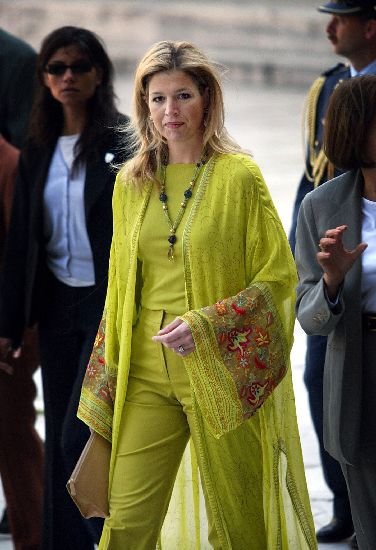
What I know also is that not all people in the world like to modernise their traditional dress. I read an article about this subject, I post it down with the link :) Traditional Dress Despite these and other pressures to adopt Western fashions, many people throughout the world have either maintained or readopted Traditional dress in everyday use, or for selected occasions. Very often Traditional dress has gone through a conversion process from everyday attire, to a fixed formal dress for weddings, government functions, traditional dance, or religious celebrations. Many styles of Traditional dress throughout the world also were, and are, assimilated into Western fashions. Traditional dress is enjoying a "comeback" in some areas of the world, (for example in many Moslem countries) even while losing ground in others. However, numerous examples of Traditional dress have survived into the 21st Century either in their original form, or in modified versions The reasons for preserving Traditional dress are as various as the reasons for abandoning it. Traditional dress tends to be durable and slow to change, so it discourages consumerism and a need for constant new clothing. Traditional dress reinforces the values that the originating culture holds towards the body and gender, and therefore, is usually consistent with the indigenous religion's teachings on that subject. ..... Traditional dress is used, even in Western culture, when a statement needs to be made about what the culture regards as unchanging values. This is why traditional dress is used in coronations, investitures, graduations, weddings, funerals, social and religious rites, and why even minor changes to items of dress in these cases can cause serious controversy. Traditional dress also usually emphasizes the Aesthetic of a particular culture, and tends to best fit and flatter the typical body types of people of that ethnic heritage. Western fashions typically are designed to flatter usual European body types, and often look clunky on people who have different proportions. Traditional dress is also, often, designed for practical use in the climate and conditions of it's area, and may be retained by locals, or even adopted by visiting Westerners because of it's obvious comfort or utility. ..... From http://www.costumes.org/classes/fash...itiondress.htm |
|
#102
|
||||
|
||||
|
Quote:
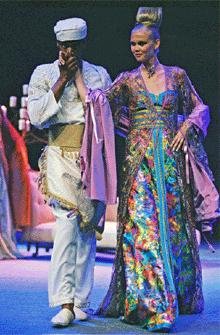
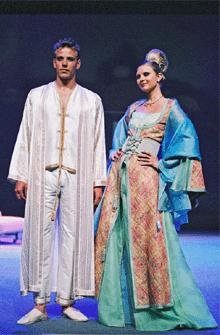
I heard of Dubai, NEW DELHI, HONG KONG, BEIRUT, SEVILLA, Muscat ... fashion shows/weeks. Down I post some pictures (from gettyimages) of models who wears traditional dresses made by contemporary designers who are inspired from their own traditions. I post few examples. There are many contemporary designers around the world who work with their traditional dresses ... it's not Moroccan exception. 1st- A model displays a traditional costume from the Muscat governorate during a fashion show organized by the Omani Women's Association in the capital Muscat late 15 December 2003. 2nd - Arab models display traditional "gallabiya" dresses designed by Saudi designer Amina al-Jassem in Manama late 03 November 2003. 3rd - Brand Collection Show II appears on stage wearing designs by designer Susie Hedijanto of Indonesia in Hong Kong 21 January 2005. 4th-5th - A model wears a creation by Spanish designer Carmen La Torre during the Simof 'Salon International of Flamenco Fashion' show at the conference centre in Sevilla, Spain, 6 February 2005. 6th - An Indian model displays a creation by Indian fashion designer Meera Muzaffar Ali at the Lakme India fashion Week (LIFW) in New Delhi, 02 May 2004. 7th - A model displays a creation by Kuwaiti fashion designer Adiba El-Mahboub late 12 March 2004 in Beirut. Last edited by abir; 02-26-2005 at 03:34 PM. |
|
#103
|
||||
|
||||
|
Quote:
|
|
#104
|
||||
|
||||
|
Quote:
|
|
#105
|
|||
|
|||
|
This thread has now been cleaned up.
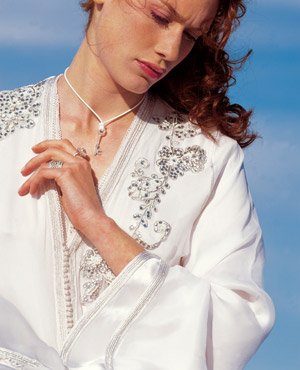
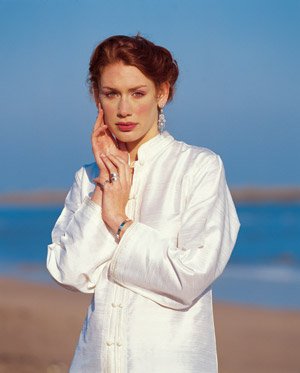
It is a very beautiful thread with many beautiful examples of traditional Moroccan dresses. The detailing and embroidery is phenomenal. I hope to see more additions and contributions. |
|
#106
|
||||
|
||||
|
beautiful Takchita :)
Last edited by Amira; 04-30-2005 at 10:32 PM. |
|
#107
|
||||
|
||||
|
Quote:
Oh thanks a lot alexandria for updating this thread,i was thinking where it was ,especially that today began the yearly big event of moroccan caftans in marrakesh, collections 2005:) ,i'll try to follow it and to post here all news about! |
|
#108
|
||||
|
||||
|
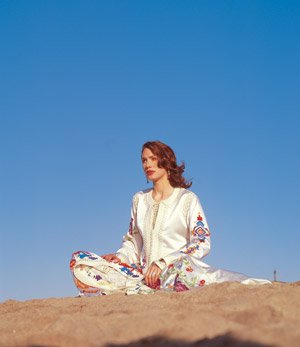
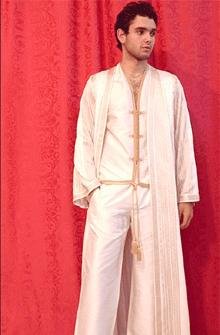
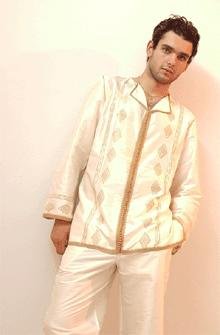
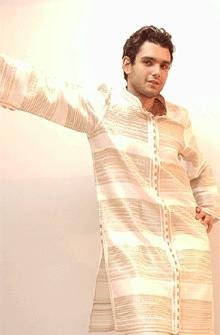
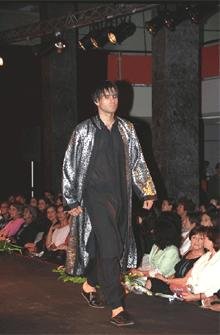
Designers Caftan 2005 Haute couture:
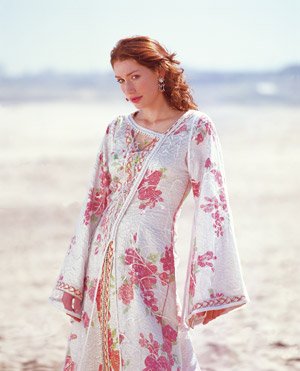
Najia Abadi: The craftsman and the ambassadress Topic of the collection 2005: the stars never die, as long as their films exist. FAdwa Al Hamid: Mysteries of Desert Topic: the marriage of a Saoudi princess. Zineb Souissi: Between voyage and Authenticity Topic: a voyage through Morocco, Morocco with the multiple faces: landscapes, colors, reasons, drawing.... Lahoucine Aît El Mehdi: Berber lovesong Topic: Smart lovesongs nostal' . Mohamed Lakhdar: The Fabric Topic: The Queen of Africa . Achraf Makoudi: EL Andalous Topic: Return to the Andalusians . Samira Haddouchi: The Woman is made Thème queen: the Queens ravel Young talents. Maria Ouazzani Chahdi: Promeneuse Topic: "El Habba" of Ouezzane ? Hassan Bouchikhi: 100% House Topic: Jeballarif ? Loujaîne: Fascination Amazighe Topic: Désertitude in Amazigh . Amine Mohammed Boufi: a sheet for the statement Topic: the caftan represents it to me, you, the other, it is Morocco in its plurality . Assia Benabdelah: a challenge Jebli Topic: Jebli . Rkia Aît Blal: a Jewel Topic: Wrap Bijou . Mohammed Elamine Mrani: on the traces of a child Topic: Beauty Naturalness . Zineb Lyoubi Idrissi: It does master key Grant. Abdelali Ouled Arab: Sun raising to the Maghreb. Bouchra Sbai: Silk for one evening. Siham El Habti: Feelings in Bouquet Creators Craftsmen . Ihssane Ghailaine: To release the flowers. Paul Fayne: The Multi-ethnic Compromises. Karima El Alaoui: Of gold and Bronze. Dahab Zraiki Ben Aboud: Further. Batoul Cain Allah: Baroque of Chaouen Loan-with-to carry. Hanane Imani: loan-with-to carry in Majdoul. Karim Tassi: Between Dress And Caftan. Nabil Dahani: Simple sensuality. Fadelah Berrada: Pinks and their way. Emaele Duque: Caftan In Destiny. Zina B By Naima Bennouna and Zineb Lyoubi Idrissi: Annoce Freshness the color. Julia: Eastern Dance. Caftan in figures: Public: 1000 people? A number of creators Haute couture: 7 Morrocans and 1 foreigner? A number of creators craftsmen: 5? A number of files new talents: 60? Numbers new selected pre talents: 12? Selection of new talent ravelling on caftan: 5? A number creative loan-with-to carry: 12? A number of days of processions: 20 + final show? A number of mannequins: 40 women, 3 men? A number of people in back training course (dresser chief, dressers, assistants...): about thirty? A number of behaviours presented: meadows of 300 To read or read again: A festival of American rock'n'roll in Marrakech Marrakech celebrates the 40 years of the Festival of popular arts Nouveau festival in Marrakech. |
|
#109
|
||||
|
||||
|
Albert Oiknine
Return to the sources With his traditional Jewish wedding dress, Albert Oiknine returns to more close to the traditional caftan. Academic lines hustled by a work of perlage, embroideries and of sumptuous fabric where “the Albert style” remains recognizable between thousand. The designer equipped a gift confusing with volumes works, this year still, a homage to the Moroccan High-Seam of which it is L’one of the most talented representatives. A work of goldsmith absolutely sublissime... |
|
#110
|
||||
|
||||
|
Nadia Tazi:
Great South all! Sparks of the desert and run ground for Nadia Tazi who refashions here a caftan with the references sahraouies. Capes with the graphic details of the great south and embroideries traditional in a camaieu D’but, of chocolate and Bordeaux wine underline a femininity assumed in a cordial atmosphere. The designer flirts passionally with the south under all its seams. A splendid table for a tended and engraved work. Imposing. |
|
#111
|
||||
|
||||
|
Karim Tassi:
Young Urban Women Modern caftans, of blacks, pinks and Pasteel for a hard and pure woman protected by a belt jewel “hand from Fatma”. Karim Tassi works a style intended for an urban, smart woman and turning pink brittleness whe. Environment techno for a contemporary caftan. For his first Caftan edition, the maroco-Parisian designer imposes his creativity, his immense talent and his acute direction of the trade. A wind of freedom. |
|
#112
|
||||
|
||||
|
Lahoucine Aït Al Mahdi:
Stolen secrecies An environment dedicated to the secrecies, the memory, childhood with a subtle and coloured work hidden behind the fallen black ones. Sublimate singularity where it is necessary to have patience for finally discovering what is hidden..... Lahoucine Aït Al Mahdi plays with the wheels of our unconscious, elegant fabrics and of colors punchy to wish. With a work of superpositions in the tone blacks covering an infinite feeling with memory with a key of smart English. |
|
#113
|
||||
|
||||
|
interesting, thanx Monalisa .
|
|
#114
|
||||
|
||||
|
Nabil Dahani:
Glamourissime Smart So the touch Audrey Hepburn. Pure fifties, a parisian elegance, line feminissime which redynamism the caftan with happiness. Fuchsia, green bronzes and silky black, the three colors headlight of the pallet, embroideries fine and maâlem delicate install Nabil Dahani on the podium of largest designers of his generation. Jouissif, funny and brilliance, this fabulous table of caftans so creative are a vigorous blow of whip with anestablished order, furiously original. |
|
#115
|
||||
|
||||
|
Quote:
you are welcome houri. |
|
#116
|
||||
|
||||
|
Mohamed Lakhdar:
Dazzling pallet! Marvellous direction of the colors, interbreeding of fabrics and fabulous patchwork which always fall to just, Mohamed Lakhdar is a large painter of the caftan. Modern and fabulously tonic, the caftan of Mohamed Lakhdar draws from a marocanity very 21st century when the large capitals of the international mode meet local regionalism without shade of apprehension. Let us note the work of the belts to the reasons “zellige”, so funny and so pretty… |
|
#117
|
||||
|
||||
|
Samia Berrada:
the water, the rock and the fire… Crescendo of colors for a Volcano “topic” with wish. Turquoise green to evoke the element water, blue harms, of cobalt for the rock. And in an apotheosis of breaking lava, reds, all the reds… As of the topic, Samia Berrada proof her strong temperament supported by a know-how to measure of the caftan makes. For his 1st edition, the designer makes her entry by the large door of the creators High-Seam. An immense talent to be followed very near. |
|
#118
|
||||
|
||||
|
Zahra Yaagoubi:
Flowered Flowering of happiness with pinks, orchises, lilies, thoughts, œillets, etc, delicately embroidered and beaded hand, Zahra Yaagoubi creates, here, a true anthem with the girl in flower, spring and the légèrete confused. With strong colors, lace of Calais, printed velvet, muslin declined, its caftans joins the long flowered tradition of the behaviours High-Seam. Between glares of tenderness and colors, Zahra Yaagoubi reinvents a woman air, untied and subtly female. |
|
#119
|
||||
|
||||
|
Najia Abbadi:
SO Sexy! Cut off here, transparency there, jarretelized for the bride, the caftan of Najia Abbadi draws its inspiration first in the female linen room. An audacity which is not to displease to us in a beautiful whole of traditional invoice. By mixing the two kinds, the designer modernizes the caftan without never forgetting to pay homage to him. The tone often clear of fabrics support an idea as delicate as significant. Virtuosity successful for a sexy signed caftan. |
|
#120
|
||||
|
||||
|
Samira Haddouchi:
Aphrodite of North For a goddess of beauty resulting from Greek antiquity, XVIIIème Moroccan century and cultural referents. A scientist mixing of signs for an ultra creative line female and cherished by a singular and spangled designer. Girdle majdoul, embroideries, "mâalem" and flowering of gold for a hieratic, proud and noble woman. Samira Haddouchi clarifies tone scintillating a traditional layout breaking, that and there, in the cuts and machine-made with an image stick-rise of the patrician greco-free-Morrocan woman. |
![]() |
| Currently Active Users Viewing This Thread: 1 (0 members and 1 guests) | |
| Thread Tools | Search this Thread |
| Display Modes | |
|
|