![]() |
![]() |
|
|||||||
| Home | Portal | Blogs | Articles | Calendar | Register | FAQ | Members List | Royal Links | Search | Today's Posts | Mark Forums Read | Chat Room |
![]() |
|||||
|
|
![]() |
|
|
Thread Tools | Search this Thread | Display Modes |
|
#21
|
||||
|
||||
|
Is there any thruth in the rumours that Willem III had a gay relationship with Hans Willem Bentinck, the first Earl of Portland.
Another thing I heard is that the States of Gueldres offerend Willem III the title Duke of Guelders. Why didn´t this work out? |
|
#22
|
||||
|
||||
|
About your last question: Guelders and the other 2 provinces that were so easily invaded by the French had difficulties in getting their position back in the States General after the peace treaty. Esp. Holland thought that Gueldres surrendered far too quickly and wanted to govern the province as a generalitietsland, like they did with N-Brabant. So no vote in the state general and under direct rule of The Hague. Now the House of Orange and the regents of Holland were usually each others enemies, and in this case it was no exception. Guelders hence sought protection with the Orange party. The Orange party in return made sure that Gueldres got their nromal position in the States General back. They offered Willem III the Ducal title, but that was probably blocked by the regents. Still, Gueldres, like Zeeland, would remain the most loyal state to the house of Orange till the French invasion in 1797. They basically always supported the Orange party.
__________________
|
|
#23
|
||||
|
||||
|
On the frontpage of saturdays NRC Handelsblad newspaper there was an article about new research on the murder on the de Witt brother. Before it was assumed that the brothers were lynched by the mob, with the approval of Willem III. The recent research says this is untrue and they were lynched by burghers as well, who were usually anti-Orange. So the role of Willem III in this is not as clear.
Of course Dumas made a real crook out of him in 'The Black Tullip', as he made WIllem III watch in the middle of the crowd, while his old tutor was lynched.
__________________
|
|
#24
|
||||
|
||||
|
Are you sure this picture could not be Queen Anne?? (notice st. Edwards crown)
__________________
it is impossible to remove one inconvenience without another emerging (machiaveli) |
|
#25
|
||||
|
||||
|
I'm referring to the third picture btw
__________________
it is impossible to remove one inconvenience without another emerging (machiaveli) |
|
#26
|
||||
|
||||
|
I too think it's Queen Anne, because the portrait you're referring to bears some resemblance to other portraits of Queen Anne, but I'm not sure...
|
|
#27
|
||||
|
||||
|
yes the resemblance also ... but the composition too.. Mary, I believe is never painted with such a regal 'aura' that doesnt seem to leave room for William... but please correct me if im wrong..
__________________
it is impossible to remove one inconvenience without another emerging (machiaveli) |
|
#28
|
||||
|
||||
|
I think you are right actually. Mary's face is usually somewhat different like in the first painting and her eyes are smaller.
Out of curiosity, why wouldn't Mary wear the Edwards crown?
__________________
|
|
#29
|
||||
|
||||
|
I suppose because she was always submissive to her husband, which is shame, considering that she was a queen regnant. She didn't want to look more regal than her husband, not even in the portraits. It seems that she was only painted while touching the crown with her hand in the style of Portuguese monarchs.
Are there any theories about their incapability to bear children? William didn't have children by any of his mistresses, as far as I know, so it's likely that he was the one with a problem. |
|
#30
|
||||
|
||||
|
I m not sure if William ever had a mistress actually. I believe there were rumours about Elizabeth Villiers, who was aknowledged as his mistress but the nature of their relationship is unclear. Historians still disagree about William's (supposed) homosexuality though.
In any case, Mary was pregnant but miscarried. After an illness (I do not know which one) she was unable to have children anymore.
__________________
Last edited by Marengo; 03-18-2009 at 06:27 PM. |
|
#31
|
||||
|
||||
|
Elizabeth Villiers was defintely a mistress of William's, but she seems to have been the only one. She later married and had children when she was older ( and she wasn't really young when she was William's mistress), proving she could at least have children. But I agree it was illness of Mary's. It could have been both of them, too.
|
|
#32
|
||||
|
||||
|
Quote:
Mary's crown could off course have been a smaller version of the st. Edwards, point is that I cant remember having seen any painting of Mary in full regalia without William next to her
__________________
it is impossible to remove one inconvenience without another emerging (machiaveli) |
|
#33
|
|||
|
|||
|
Why didnt William marry again after the death of Mary?
|
|
#34
|
||||
|
||||
|
Some people suggested him that he should remarry, but he replied that angry: did they forget about the Queen already? Though many assumed he was cold towards his wife, William III grieved for weeks, wept constantly and sunk into a depression after his death. Now his real motives might be less sentimental. If he would have children it would leave a tricky situation: princess Anne and her son (who died in 1700) were before Williams children in the line of succession for example. And if the child inherited both the British crown and the Dutch stadholdership.
Queen Mary also left him a letter, which she wrote shortly before she died, with advise etc. After he read that letter he never saw his mistress (forgot the first name) Villiers again and he became even more punctual in his religion. But we don't know what else was written in the letter.
__________________
Last edited by Marengo; 05-29-2009 at 11:34 AM. |
|
#35
|
|||
|
|||
|
Thank you very much for that information.
|
|
#36
|
|||
|
|||
|
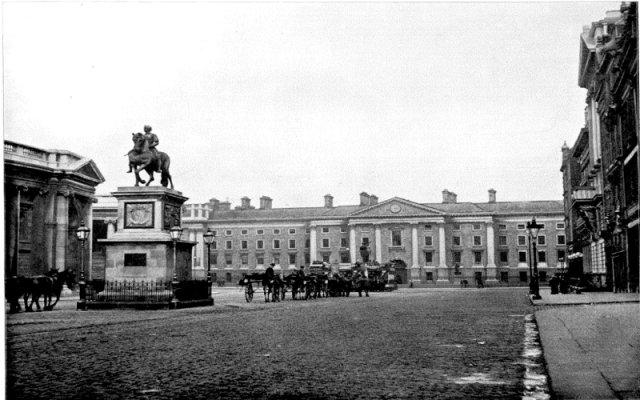
An equestrian statue of William III by the Dutch sculptor Grinling Gibbons was erected in Dublin, Ireland in 1701, it was removed in 1929 after a small explosion did minor damage. It was melted down in the 1940 s, a sad loss.
|
|
#37
|
||||
|
||||
|
I'm a bit confused.... According to Wikipedia, Stadtholder was the de facto Head of State in the Low Countries in the 18th century. Did he have to renounce his Dutuch positions to reign in the UK or was he King of England and Head of state of the Netherlands as well as Stadtholder was a hereditary position?
|
|
#38
|
||||
|
||||
|
He definately stayed on as Stadholder in The Netherlands, the entire idea behind the glorious revolution and all was to prevent England from forming another alliance WITH the catholic French to start another war against the Dutch republic. Instead, the Anglo-Dutch(-Austrian-Spanish) alliance prevented France from becoming too dominant on the continent.
He stayed stadholder until he died, he kept visiting the Netherlands regularly and on several occassions for months, esp. during the militairy campaigns in spring/summer. But also to relax with his friends at Het Loo. His wife Mary stayed home in England, much to her dismay as she never wanted to leave her Dutch friends and palaces. Life in the quiet, tidy, small and calvinist The Hague suited her better than all the intregues at the British court. After Mary died the king did not visit The Netherlands very often (or at all), and stayed in London. Originally the stadholdership was NOT hereditairy. The stadholders were the representants of the dukes of Burgundy (later the German emperor/king of Spain) in the 17 dutch provinces. At the time of the Dutch revolt against the Spanish, prince William of Orange was stadholder of Holland & Zeeland. The stadholdership became de facto hereditairy, both his sons became stadholders, and his grandson Willem II became stadholder too. However, the house of Orange usually had the powerful regents of Holland and esp. those of Amsterdam against them. So when Willem II died the position of stadholder did not go to his son (who was born after his death), but remained vacant. In the 'disaster year' 1672 the Netherlands was invaded by France, England, Colgne, Münster etc. and the mob blamed the regents. Willem III was installed as stadholder, and over the years he would get more and more powers. During this time the stadholdership became hereditairy officially, but Willem III had no children. After his death in 1702 the regents wasted no time to claim a second stadholder-free period. Though the heir of Willem III was his Frisian cousin Johan-Willem-Friso of Nassau Dietz. JWF was however stadholder of the three northern provinces: Friesland, Groningen and Drenthe. The other provinces (Holland, Zeeland, Utrecht, Guelders) had no stadholder. When the French invaded in 1747, in what proved to be another bad war for the republic, people turned to the house of Orange again. Johan-Willem-Friso was already dead, but his son Willem IV became stadholder of one province after another. In the end he would be the first stadholder of ALL 7 provinces, and the court would move from Leeuwarden (Friesland) to The Hague. The stadholdership became hereditairy once more, and this time also in the female line. The republic was a monarchy in all but in name, though not an absolute monarchy like France. Willem IV was married to a British princess Royal btw: Anne of Hanover. In 1795 stadholder Willem V and his family had to flee from The Netherlands for French troops. He would be the last stadholder, after the congress of Vienna in 1815, his son WIllem VI would become king WIllem I.

__________________
Last edited by Marengo; 06-24-2009 at 06:10 AM. |
|
#39
|
||||
|
||||
|
So does this mean that in a way the Netherlands and the UK were the one country during his time on the throne?
|
|
#40
|
||||
|
||||
|
No, they were two seperate countries with the same head of state. Pretty much like Norway and Sweden under the Bernadotte rule.
__________________
|
![]() |
| Currently Active Users Viewing This Thread: 1 (0 members and 1 guests) | |
| Thread Tools | Search this Thread |
| Display Modes | |
|
|
Similar Threads
|
||||
| Thread | Thread Starter | Forum | Replies | Last Post |
| Stadholder Willem II and Princess Mary Henrietta Stuart | Marengo | Dutch Royal History | 19 | 11-04-2009 11:06 AM |
| Stadholder Willem V, Princess Wilhelmina and family | Marengo | Dutch Royal History | 24 | 01-14-2009 11:06 AM |
| King/ Grand Duke Willem III (1817-1890) Queen Sophie (1818-1877) and sons | Marengo | Dutch Royal History | 41 | 08-21-2008 11:18 AM |
| Murder of King Willem II by his son, King Willem III? | Marengo | Dutch Royal History | 6 | 09-27-2007 06:38 AM |